CNAPP Comparison 2026: Wiz vs Prisma Cloud vs Orca vs CrowdStrike vs Lacework
Cloud-Native Application Protection Platforms compared for 2026 - Wiz, Prisma Cloud, Orca, CrowdStrike Falcon Cloud Security, Lacework, Aqua, Sysdig Secure. CSPM, CWPP, CIEM, KSPM coverage with agentless vs agent-based architecture and UAE compliance fit.
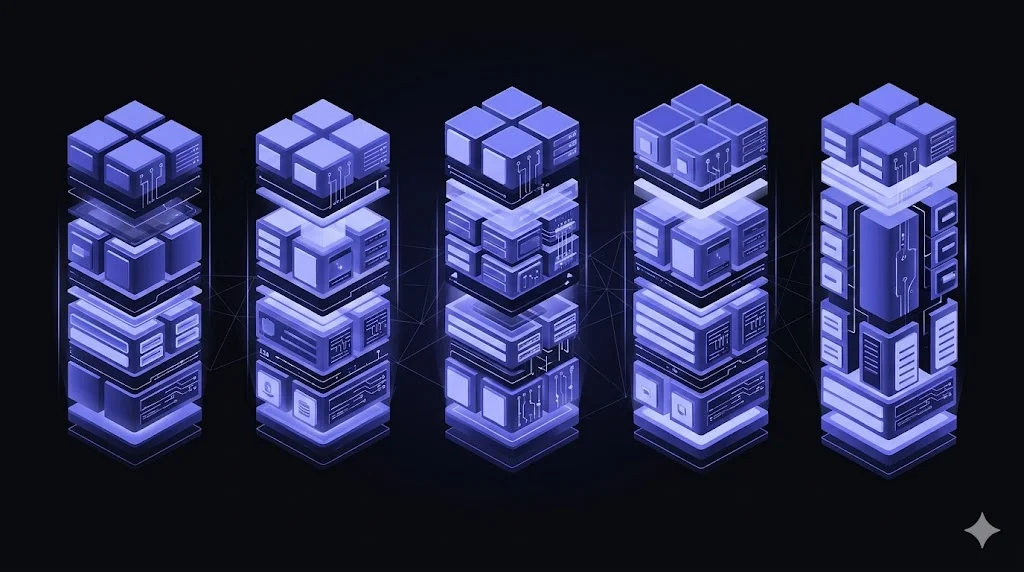
CNAPP - Cloud-Native Application Protection Platform - is the 2026 category name for the product class that consolidates previously separate cloud security tools. A mature CNAPP covers CSPM (Cloud Security Posture Management), CWPP (Cloud Workload Protection Platform), CIEM (Cloud Infrastructure Entitlement Management), KSPM (Kubernetes Security Posture Management), container scanning, IaC scanning, and increasingly DSPM (Data Security Posture Management) - all in one platform.
This guide compares the 7 dominant CNAPPs in 2026 - Wiz, Prisma Cloud, Orca, CrowdStrike Falcon Cloud Security, Lacework, Aqua Platform, Sysdig Secure - with honest notes on architectural choices, Kubernetes depth, pricing posture, and fit for UAE-regulated enterprises under NESA, DESC ISR v3, and CBUAE Article 13.
What CNAPP Actually Consolidates
Before 2021, cloud security was a sprawl of point tools:
- CSPM for cloud configuration compliance - CrowdStrike, RedLock, DivvyCloud, Dome9
- CWPP for workload runtime protection - Twistlock, Aqua, StackRox, Sysdig
- CIEM for cloud identity and entitlements - Ermetic, Sonrai, CloudKnox
- Container image scanning - Aqua, Anchore, Prisma Cloud Compute
- Kubernetes posture - StackRox, Alcide, Aqua
- IaC scanning - Bridgecrew, Snyk IaC, tfsec
CNAPP fuses all of these into one platform with a shared graph model so the security team can trace attack paths across layers - from a public S3 bucket to an over-permissive IAM role to a vulnerable container to a Kubernetes workload with sensitive data.
For UAE enterprises running multi-cloud (common because CBUAE-regulated banks often run both AWS me-central-1 and Azure UAE North) and Kubernetes at scale, CNAPP is increasingly the default security-tooling procurement decision in 2026.
The 7 Leading CNAPPs
Wiz - The Speed Leader
Wiz is the fastest-growing CNAPP in 2026 and arguably the category leader. Its differentiators:
- Agentless by default - reads cloud APIs and snapshots disk volumes for analysis without installing agents
- Graph-based data model - single semantic layer across all cloud resources, identities, and workloads; enables attack-path analysis across previously separate domains
- Speed to insight - typically produces full-tenant coverage within hours of deployment
- Cloud-context-aware prioritization - understands which misconfigurations actually enable attacker movement and prioritizes accordingly
Wiz covers AWS, Azure, GCP, Oracle Cloud, Alibaba, IBM Cloud, plus Kubernetes (EKS, AKS, GKE, OpenShift, vanilla K8s), plus runtime sensors (optional) for deeper container and VM telemetry.
Fit: mid-to-large enterprises optimizing for time-to-value. Strong UX, expensive, dominant mindshare.
Prisma Cloud - The Palo Alto Platform
Prisma Cloud (Palo Alto Networks) is the longest-standing full-stack CNAPP. Combines RedLock (CSPM heritage), Twistlock (CWPP heritage), and newer modules under one platform. Strongest attributes:
- Deep integrated runtime protection via Prisma Defender agents (Twistlock ancestry)
- Broadest compliance framework coverage - CIS, NIST, PCI DSS, HIPAA, SOC 2, FedRAMP, ISO 27001, and regional frameworks
- Vendor consolidation with Palo Alto firewalls, Prisma SASE, Cortex XDR
- Heavy operational footprint - powerful but not the “deploy in a day” CNAPP
Fit: large regulated enterprises already running Palo Alto perimeter security; defence-in-depth use cases; enterprises wanting one security vendor across perimeter + cloud + endpoint.
Orca - The Agentless Pioneer
Orca Security pioneered the agentless CNAPP model before Wiz. SideScanning technology produces comprehensive inventory and vulnerability findings without installing agents - similar capability to Wiz. Orca typically prices below Wiz and positions as the value pick in the agentless-CNAPP category.
Graph-based risk prioritization, attack-path analysis, and compliance coverage all match Wiz on core capabilities. UX is clean. Runtime telemetry is optional (same as Wiz).
Fit: mid-size enterprises seeking Wiz-class agentless CNAPP at a lower price point. Strong technical alternative.
CrowdStrike Falcon Cloud Security - The EDR-Extended CNAPP
CrowdStrike Falcon Cloud Security extends CrowdStrike’s dominant EDR platform into cloud and Kubernetes. Differentiator: single agent and single platform covering endpoints + cloud workloads + Kubernetes. Unique among CNAPPs in that unified-agent approach.
Strong on runtime detection thanks to Falcon’s telemetry engineering. Less mature on CSPM and CIEM than Wiz or Prisma Cloud but closing quickly. Attractive for CrowdStrike EDR customers who want to consolidate vendors.
Fit: organizations already on CrowdStrike EDR wanting vendor consolidation; Windows + cloud workload heavy environments.
Lacework - The ML-First CNAPP
Lacework (recently acquired by Fortinet) pioneered ML-based anomaly detection in cloud environments. Strong technical story around behavioural analysis that reduces false positives. Kubernetes and container coverage is solid but narrower than Wiz or Prisma Cloud.
Post-acquisition, Lacework is being integrated into the Fortinet security platform - strategic direction for 2026+ is consolidation into the broader Fortinet portfolio.
Fit: organizations that value ML-based anomaly detection and are comfortable with post-acquisition platform roadmap uncertainty.
Aqua Platform - The Kubernetes-First CNAPP
Aqua Platform is the commercial offering from the same team behind open-source Trivy and Trivy Operator. Kubernetes-first by design, deepest K8s security integration among commercial CNAPPs, and the natural upgrade path for teams running Trivy OSS at scale.
Aqua covers CSPM, CWPP, CIEM, KSPM, container scanning, and IaC - the full CNAPP scope - but emphasises the Kubernetes and container runtime story over broader cloud posture. Runtime Enforcer provides in-line blocking of policy violations at container execution time.
Fit: Kubernetes-first organizations; teams migrating from Trivy OSS to a commercial platform; enterprises where container security is the primary concern.
Sysdig Secure - The Falco Descendant
Sysdig Secure is built on the Falco runtime detection engine (Sysdig is Falco’s original commercial sponsor and core maintainer). Strongest runtime detection story in the CNAPP category, with deep Linux syscall and Kubernetes telemetry.
Sysdig expanded beyond runtime into CSPM, CIEM, container scanning, and IaC to become a full CNAPP. Stronger on runtime than on cloud posture compared to Wiz or Prisma Cloud.
Fit: Kubernetes-heavy environments prioritizing runtime detection; organizations already running Falco OSS wanting commercial support.
Comparison Table
| Platform | Architecture | CSPM | CWPP Runtime | CIEM | KSPM | Container | IaC | Strongest On |
|---|---|---|---|---|---|---|---|---|
| Wiz | Agentless + optional sensor | Yes | Yes | Yes | Yes | Yes | Yes | Speed, attack-path analysis |
| Prisma Cloud | Agents + API | Yes | Deep | Yes | Yes | Yes | Deep | Compliance breadth, Defender |
| Orca | Agentless (SideScanning) | Yes | Yes | Yes | Yes | Yes | Yes | Agentless value |
| CrowdStrike FCS | Unified Falcon agent | Yes | Yes | Yes | Yes | Yes | Yes | EDR+Cloud consolidation |
| Lacework | ML-based agent | Yes | Yes | Yes | Yes | Yes | Yes | ML anomaly detection |
| Aqua Platform | Agent + in-cluster | Yes | Yes | Yes | Deep | Deep | Yes | Kubernetes-native depth |
| Sysdig Secure | Falco-based agent | Yes | Deep | Yes | Deep | Yes | Yes | Runtime detection |
The Open-Source Alternative
For teams that cannot or will not pay for a commercial CNAPP, the 2026 open-source stack delivers most of the scope:
- CSPM: Prowler (AWS), ScoutSuite (AWS/Azure/GCP), CloudSploit, or Steampipe + custom mods
- CWPP runtime: Falco with Falcosidekick
- CIEM: CloudSploit partial coverage, or Permiso open core
- KSPM: Kubescape + Kube-bench
- Container: Trivy + Trivy Operator
- IaC: Checkov + tfsec (see our IaC scanning comparison)
This stack runs entirely in-cluster and in-account, requires no vendor data residency attestation, and satisfies NESA / DESC / CBUAE data-sovereignty requirements by default. The trade-off is operational - you build and maintain dashboards, integrations, and rule tuning yourself.
Most mid-size UAE enterprises eventually move to a commercial CNAPP for centralized reporting, but the open-source stack is a viable bridge for security-maturity growth and covers most regulated use cases for early-stage companies.
UAE Compliance Considerations
For NESA, DESC ISR v3, CBUAE Article 13, NCA ECC, and PCI DSS compliance, CNAPP selection criteria include:
- Data residency - where does the CNAPP’s control plane run? Where is customer data (cloud metadata, findings, evidence) stored? Wiz, Prisma Cloud, and CrowdStrike all have EU regions; UAE-specific regions are not yet standard. Verify explicitly.
- Audit evidence - findings must export as machine-readable (SARIF, JSON, CSV) for compliance reports
- Framework coverage - CIS, NIST, PCI DSS, HIPAA, SOC 2 coverage is table stakes. UAE-specific (NESA, DESC, CBUAE) coverage varies - often custom rules are needed
- Enforcement - the Guidance across UAE frameworks is that monitoring without enforcement is reporting, not security. Configure CNAPP auto-remediation or integrate with Config/Defender for enforcement
- Integration with UAE SIEM deployments - Sentinel, Splunk, Sumo Logic all integrate with the major CNAPPs via ASFF, Defender, or webhook patterns
For the highest residency-sensitivity workloads (NESA CII, DESC classified government data, CBUAE Article 13 customer data in certain classes), the open-source stack is often the only option that provides provable sovereignty across scanner control plane, data flow, and audit evidence.
Decision Framework
Pick Wiz if: you value time-to-value, have a mature security team that will consume sophisticated tooling, multi-cloud is the reality, and budget is flexible.
Pick Prisma Cloud if: you’re already Palo Alto, need deepest compliance framework coverage, and want defence-in-depth at the platform layer.
Pick Orca if: you want Wiz-class agentless CNAPP at a lower price point and can accept slightly less mindshare momentum.
Pick CrowdStrike Falcon Cloud Security if: you’re already on CrowdStrike EDR and vendor consolidation matters.
Pick Aqua Platform if: you’re Kubernetes-first, running Trivy OSS at scale, and want commercial upgrade path.
Pick Sysdig Secure if: you prioritize runtime detection, are heavy on Kubernetes, and appreciate the Falco lineage.
Pick open-source stack if: you’re early-stage, have data-residency constraints that commercial SaaS cannot satisfy, or want to develop internal security engineering capability.
How NomadX Kubernetes Delivers
NomadX Kubernetes runs CNAPP selection and deployment engagements as fixed-scope sprints:
- 5-day CNAPP Selection Assessment - inventories your cloud + Kubernetes footprint, evaluates 3-4 CNAPPs (commercial or open-source), produces decision matrix with UAE compliance and cost analysis
- 4-8 week CNAPP Implementation Sprint - deploys the selected platform, integrates with CI/CD and SIEM, authors custom policies for UAE-specific controls, documents compliance evidence pipeline
- Monthly retainer for ongoing rule tuning, new-resource onboarding, and compliance evidence refresh
Book a free 30-minute discovery call to scope your CNAPP engagement with a NomadX Kubernetes engineer.
Frequently Asked Questions
What is a CNAPP?
CNAPP (Cloud-Native Application Protection Platform) is a unified security platform that consolidates what used to be separate products: CSPM (Cloud Security Posture Management), CWPP (Cloud Workload Protection Platform), CIEM (Cloud Infrastructure Entitlement Management), KSPM (Kubernetes Security Posture Management), container scanning, IaC scanning, and sometimes DSPM (Data Security Posture Management). The term was coined by Gartner in 2021 and has become the dominant cloud security platform category in 2026.
Wiz vs Prisma Cloud - which is better?
Different strengths. Wiz leads on speed-of-deployment, agentless architecture, and cloud-context-aware risk prioritization. Wiz's graph-based data model makes attack-path analysis faster than any competitor. Prisma Cloud (Palo Alto) has the deepest integrated runtime protection via Prisma Defender agents, broader compliance framework coverage, and strongest fit for enterprises already running Palo Alto perimeter security. For mid-size tech companies optimizing for time-to-value, Wiz typically wins; for large regulated enterprises needing defence-in-depth and vendor consolidation with firewalls, Prisma Cloud wins.
Is Wiz worth the money?
For organizations with complex multi-cloud footprints and mature security teams, yes. Wiz's differentiator is the speed of insight - days to full cloud visibility versus weeks for competitors - and the quality of attack-path prioritization. Annual spend typically starts around USD 100k for smaller deployments and scales into seven figures for large enterprises. The ROI case rests on reducing time-to-detect for critical misconfigurations and centralizing previously fragmented tooling. Mid-size UAE enterprises should compare Wiz price vs alternatives like Orca and Prisma Cloud before committing.
Does CNAPP replace EDR?
No. CNAPP focuses on cloud resources - virtual machines, containers, serverless, Kubernetes, cloud storage, cloud identity. EDR (Endpoint Detection and Response) focuses on workstations, laptops, and endpoints. Some vendors (CrowdStrike Falcon Cloud Security, SentinelOne Singularity Cloud) combine both in one agent. For comprehensive security, most enterprises run a CNAPP for cloud + an EDR for endpoints, either from the same vendor or separate.
Which CNAPP is best for Kubernetes-heavy workloads?
Wiz has strong Kubernetes posture and runtime in 2026. Prisma Cloud (Palo Alto) has the deepest Kubernetes security integration via Prisma Defender (Twistlock ancestry). Aqua Platform is Kubernetes-first by design and the natural commercial upgrade from Trivy OSS. For pure Kubernetes-focus, Aqua Platform leads. For multi-cloud Kubernetes plus broader cloud posture, Prisma Cloud or Wiz lead. Sysdig Secure is also Kubernetes-strong with its Falco lineage.
Is Orca a viable Wiz alternative?
Yes. Orca pioneered the agentless CNAPP model before Wiz did and remains competitive in 2026. SideScanning technology produces comprehensive inventory without agents, similar to Wiz. Orca typically prices below Wiz and is often the value pick when cost is a primary driver. Wiz has stronger marketing momentum and arguably better UX in 2026, but technically Orca is in the same category.
Can CNAPP satisfy NESA and DESC ISR v3 compliance?
Yes, for the continuous posture and runtime protection controls. CNAPP findings directly support NESA IA family (logging, vulnerability management, configuration baseline) and DESC ISR v3 IS family requirements. The critical question is data residency: does the CNAPP's control plane operate in UAE / EU / compliant regions, and can customer data (cloud metadata, findings, evidence) remain residency-compliant? Verify this with each vendor before procurement. Open-source Kubescape + Trivy Operator + Falco alternative runs entirely in-cluster with full residency control.
What does a typical CNAPP deployment cost for a UAE mid-size enterprise?
Annual CNAPP licence spend for mid-size UAE enterprises (200-500 developers, 2-3 cloud accounts, 50-100 Kubernetes workloads): Wiz USD 150-400k, Prisma Cloud USD 200-500k, Orca USD 100-250k, CrowdStrike Falcon Cloud Security USD 100-300k, Lacework USD 80-200k, Aqua Platform USD 100-300k, Sysdig Secure USD 80-200k. Pricing scales with cloud workload count, node count, and feature modules. All vendors negotiate heavily - list prices are rarely paid.
Complementary NomadX Services
Get Started for Free
We would be happy to speak with you and arrange a free consultation with our Kubernetes Expert in Dubai, UAE. 30-minute call, actionable results in days.
Every engagement is scoped by our principal architect, Adrian Vale: 20+ years in production engineering, 40+ professional certifications. Meet Adrian
Talk to an Expert